Chris Curl,
Editor
Nov. 20, 2025
Let’s keep it simple: the U.S. is piling on debt at a pace that worries even the people in charge.
We’re past $38 trillion, and the government is borrowing about $68,000 every second.
That kind of load doesn’t just threaten market calm… it chips away at the purchasing power of the dollar.
You probably noticed last time you had to pay your insurance premiums or buy groceries.
While policymakers argue and economists warn, many experienced investors are moving into a different lane: critical resources… hard assets that have historically held up when governments overspend and currencies wobble.
The Numbers, Plain and Simple
- Debt: $38T as of October 2025—about $111,000 per person.
- Debt-to-GDP: 118% today, on track for at least 156% by 2055.
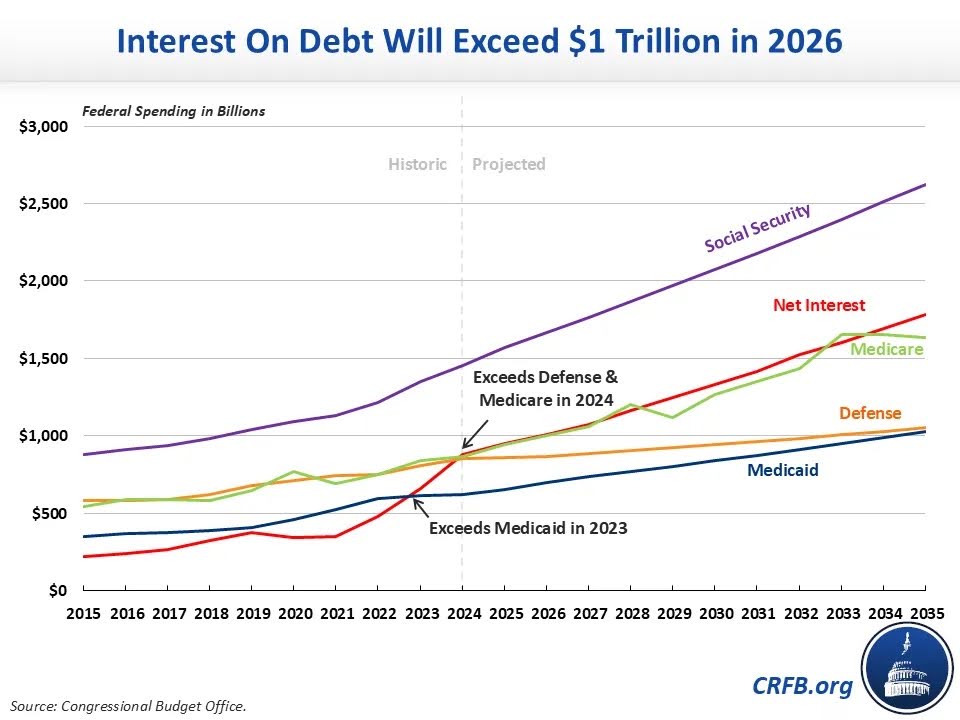
- Interest costs: $970B in FY2025, projected >$1T in FY2026 and $1.8T by 2035 (up from $881B in FY2024).
- Budget pressure: Interest is now the third‑largest federal expense, and by 2035 could consume 22.2% of all federal revenue.
- Deficit: $1.8T in FY2025—about $5B more spending every day than the government takes in.
The problem isn’t just the size of the debt… It's the exploding interest bill that crowds out everything else.
It’s not just me pointing this out.
- Jerome Powell has said it flat out: the U.S. fiscal path is “unsustainable.”
- David Kelly (JPMorgan Asset Management) describes it as “going broke slowly.” Markets aren’t panicking, yet, but the direction is clear.
- Kenneth Rogoff’s research points to a stark pattern: 51 of 52 countries that hit 130% debt/GDP eventually defaulted or devalued within 0–15 years—through inflation, restructuring, or outright default.
Why a Crisis Can Hit “Gradually… Then Suddenly”
Sentiment can flip fast.
If foreign buyers decide U.S. deficits plus rising debt mean future inflation or devaluation, Treasury yields can jump overnight. That forces the government to pay more to borrow, which widens the deficit, which pushes rates higher—a nasty loop.
- Average interest on marketable debt: now 3.406% vs. 1.635% five years ago.
- Every +1% in rates ≈ +$370B in annual interest costs.
The Inflation Route: How Currencies Quietly Get Devalued
If cutting spending or hiking taxes isn’t politically feasible, and raising rates hard enough would break things, inflation becomes the path of least resistance.
About 90% of U.S. debt isn’t inflation‑indexed, so inflating the currency shrinks what bondholders get in real terms. We’ve seen this playbook before (post‑WWII, the 1970s). With today’s higher debt load, the incentive to lean on inflation is even stronger.
Why Investors Are Pivoting to Critical Resources
This is the backdrop for the Rick Rule thesis.
For decades, he’s focused on assets that get more valuable when governments overspend and strategic supply chains tighten.
His highlights are well known:
Lumina Copper (60x), Pan American Silver (100x), and an early position in Franco‑Nevada (124,000%).
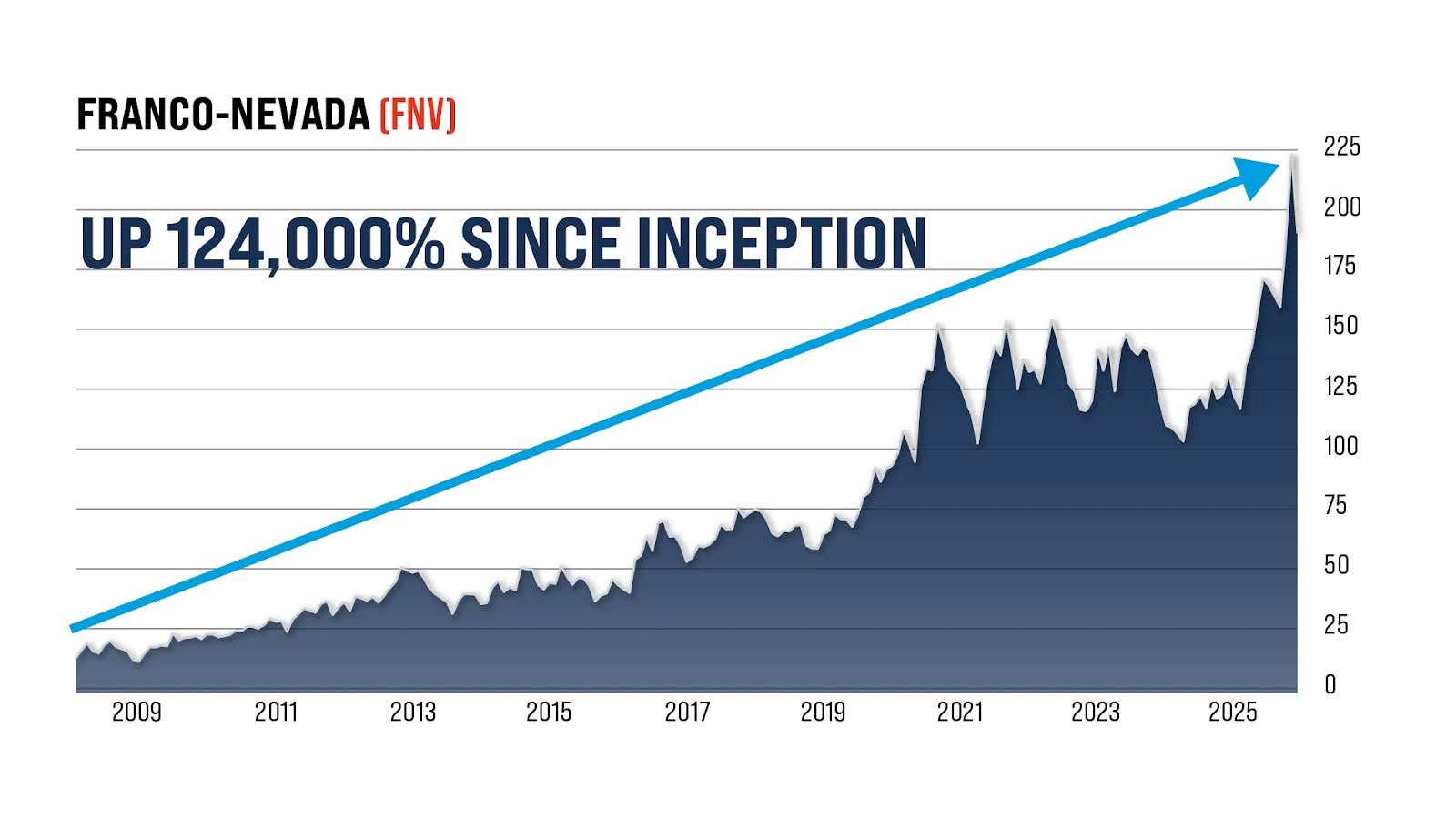
The throughline is simple: seek scarce, essential, hard assets.
Right now, critical minerals and rare earths sit at the center of national security and advanced manufacturing:
- The U.S. imports >50% of supply for 47 of the 50 minerals the USGS deems critical.
- These materials touch 91% of Navy weapons systems and 1,908 systems overall—plus smartphones, EVs, semiconductors, and renewables.
- The DoD has already steered >$140M via DPA Title III into rare‑earth processing.
- The U.S. government has even taken equity stakes in select critical‑minerals companies (e.g., Lithium Americas, Trilogy Metals, MP Materials).
The Government Backstop: Why That Matters for Your Wealth
When budgets get tight, governments still fund what’s strategic. That creates powerful tailwinds:
- Policy support & spending: A de facto demand floor for critical inputs.
- Supply chain reshoring: With China controlling a big share of mining and 85–95% of processing, U.S. and allies are building alternatives, and supporting the companies that do it.
- Hard‑asset value: Unlike cash eroded by inflation, critical minerals are tangible and scarce.
- Scarcity premium: Tier‑one deposits in good jurisdictions can command outsized value as demand ramps.
A Systematic Way to Play It: Underground Alpha
Instead of guessing among a maze of juniors and explorers, a structured approach like Underground Alpha aims to:
- Pre‑vet companies already benefiting from policy tailwinds.
- Separate real deposits from hype with technical and geopolitical screens.
- Guide position sizing and diversification.
- Track policy shifts that can reprice the entire space.
Names often cited in this context like Meteoric Resources (Brazil rare earths) or Ucore Rare Metals (which has seen sharp moves as policy interest grows) illustrate how quickly sentiment can accelerate when supply security becomes a priority.
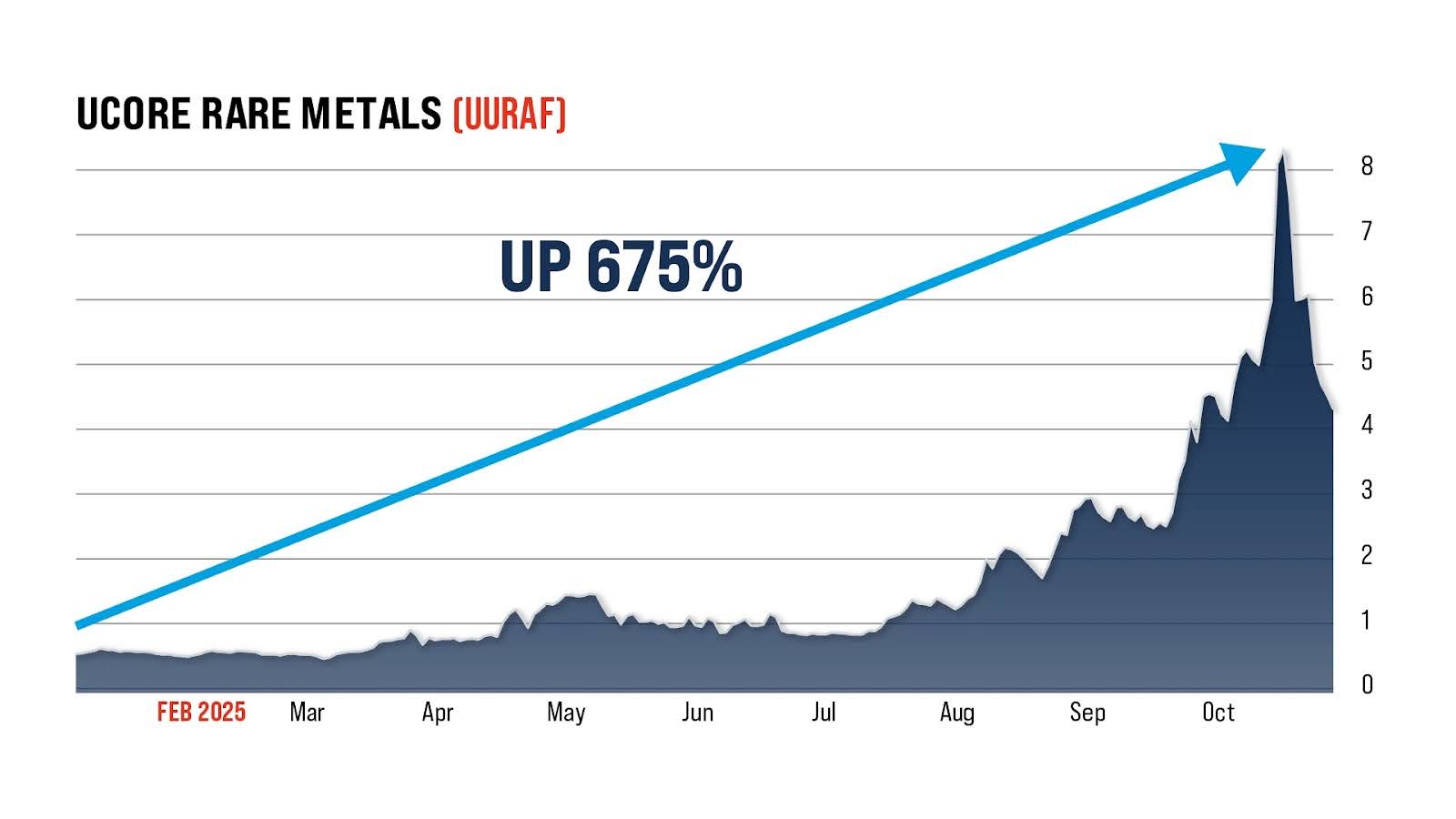
In eras of currency stress, hard assets have tended to outperform financial claims. Critical minerals go a step further: they blend inflation hedge traits with policy‑driven demand. Governments still need copper for grids, lithium for batteries, rare earths for defense, antimony for semiconductors… regardless of fiscal strain.
Protecting Your Wealth
The math is what it is: $38T in debt, $970B in annual interest already, and a path that points to either deep cuts, big tax hikes, or currency devaluation. None of those are friendly to dollar cash balances or plain‑vanilla bonds.
Positioning a sleeve of capital in critical resources… assets with intrinsic value, policy support, and structural scarcity is a practical hedge. The question isn’t whether the U.S. faces a fiscal reckoning; it’s how you’re positioned when it shows up.
Gradually, then suddenly.
And it’s not just critical minerals.
Debt is surging, the dollar is losing strength, and the money printers show no signs of slowing down. But gold? It’s only just beginning its next major move.
Recognizing its growing strategic importance, the White House is now prioritizing and accelerating support for companies exploring and developing U.S. gold mining assets.
Nick Hodge recently teamed up with Rick Rule to release a brand-new report: “The Best Gold Stocks in America”... revealing the companies that could soon land on Washington’s radar.
It’s all covered in this Underground Alpha special presentation.
Don’t get left behind.
Keep coming back,

Chris Curl
Editor, Daily Profit Cycle