Chris Curl,
Editor
Feb. 19, 2026
The last few weeks have been a reminder of what markets actually feel like when crowded trades start to unwind.
Stocks are whipping around. Leadership is cracking. The headlines are full of “AI disruption,” earnings misses, and systematic selling pressure. The tone has shifted from confidence to fragility almost overnight.
But in the middle of all that noise, gold is quietly telling a much bigger story.
And it’s not about day-to-day volatility.
It’s about a financial system being repriced in real time, and why the most aggressive way to profit from that repricing is still the same answer it was a month ago: gold scripts.
Equities haven’t just “wobbled.” They’re finally behaving like what they are: an over-owned, over-optimized system running into macro limits.
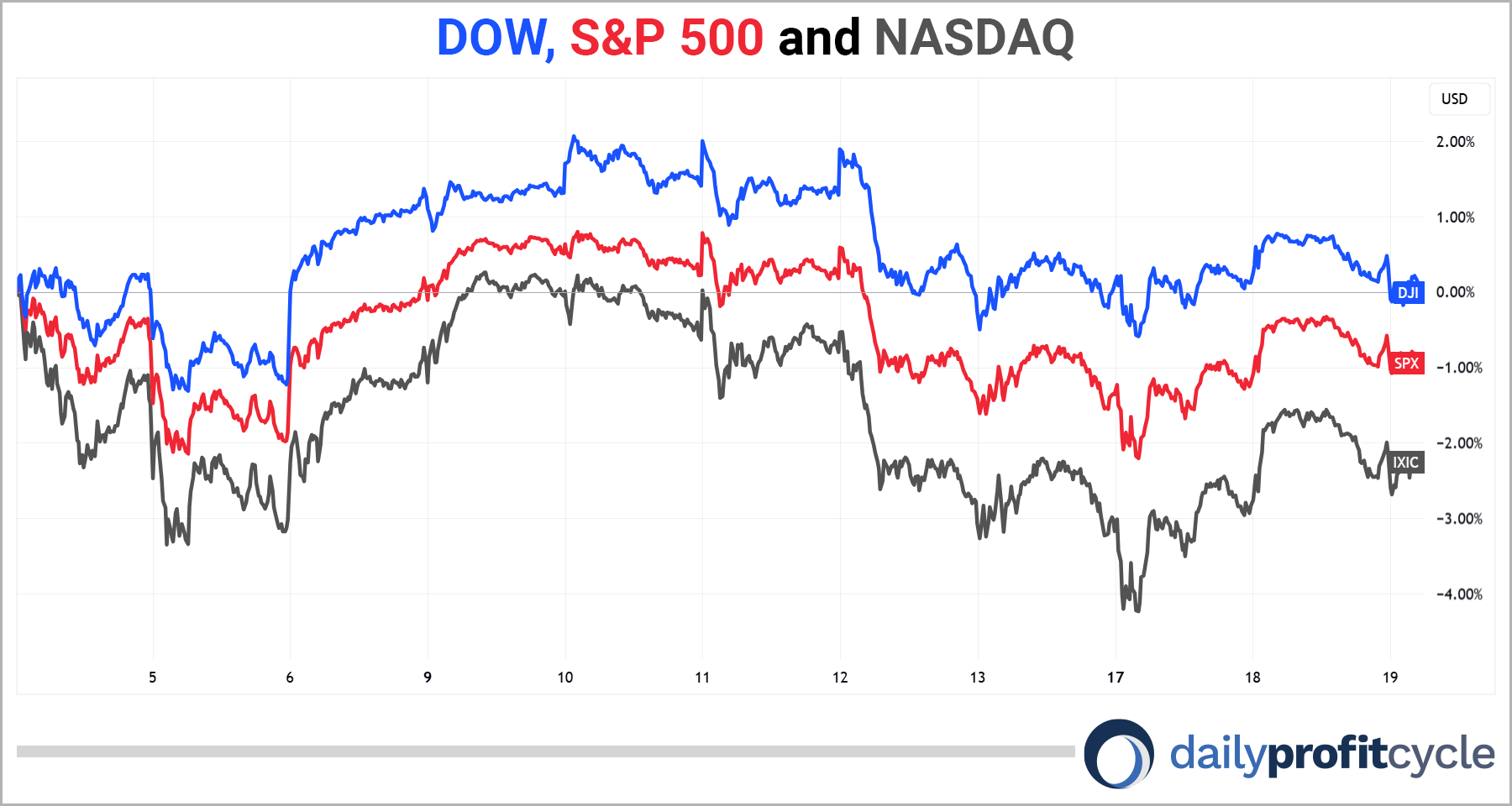
The Dow, S&P 500, and Nasdaq just logged some of their roughest weekly stretches of the year. Investors are starting to question AI-driven valuations. Crowded tech trades are getting stress-tested.
We’ve seen:
- Double-digit one-day drops in chip stocks and software names
- Mega-cap earnings that weren’t “bad”... just not perfect
- Systematic players like CTAs mechanically selling into weakness
One major desk even estimated tens of billions in potential forced selling if key technical levels break.
That’s what it looks like when a market trained to “buy every dip” runs into a macro regime that doesn’t care about the backtest.
The volatility is just the surface. Underneath it is a deeper question about growth, policy, debt, and the real value of future cash flows.
Gold Just Did Its Job… Again
Gold hasn’t been a straight line either. But that’s exactly the point.
In late January, gold blasted through $5,000 and nearly tagged $5,600. Then it hit an air pocket. The dollar strengthened. Rate expectations ticked hawkish. The “tough Fed” narrative resurfaced.
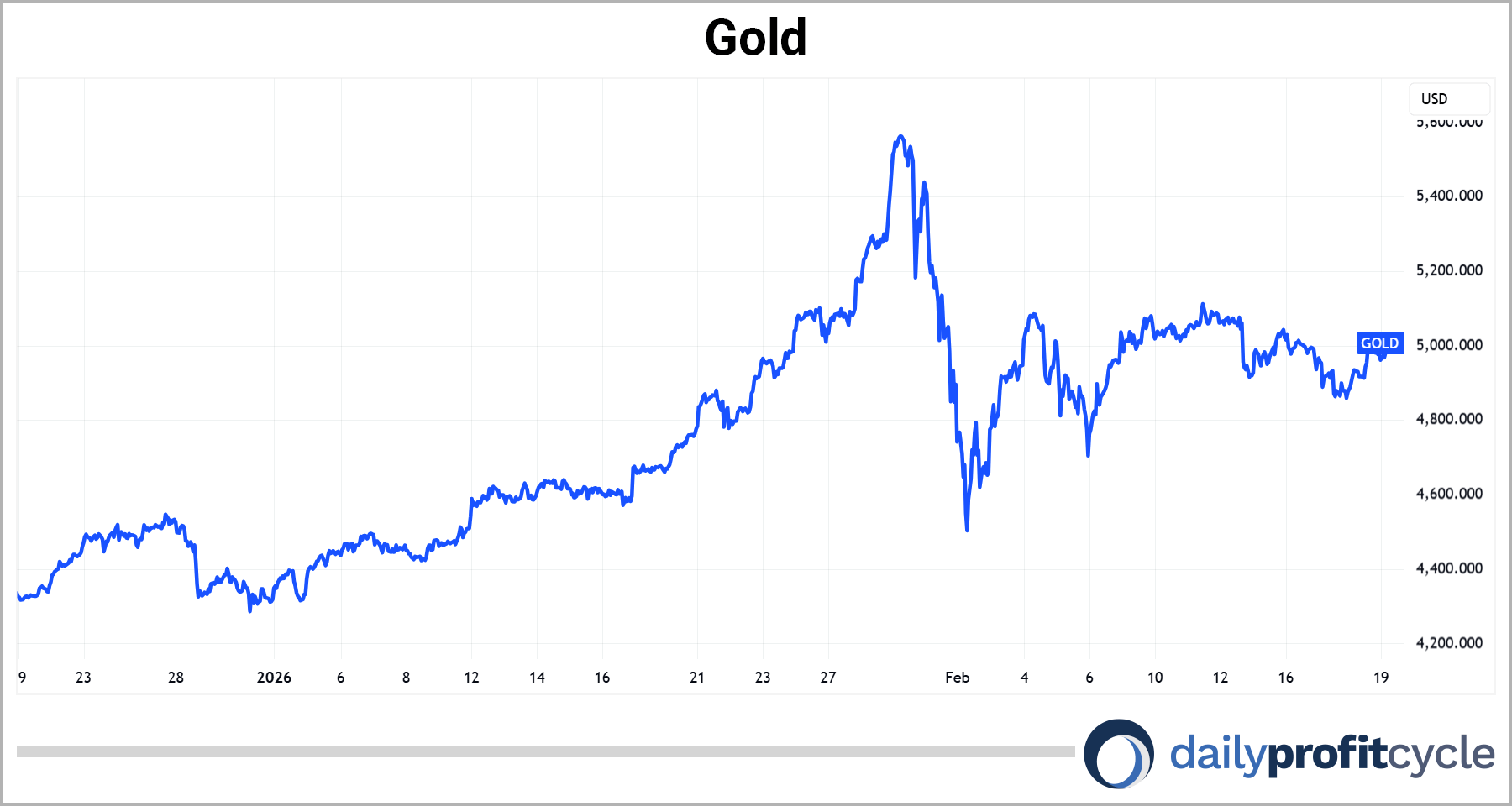
Gold briefly fell back below $5,000 in thin trading. Margin calls hit. Forced liquidations followed. The usual “Was that the top?” commentary rolled in.
And then?
It snapped back.
Gold rallied roughly 5% in a single session on February 3 (one of the strongest one-day recoveries in two decades) even with rate chatter still leaning hawkish.
More importantly, ETF and fund flows didn’t blink. Gold and gold-miner ETFs pulled in roughly $4.4 billion, marking eight straight months of inflows. Holdings hit fresh records.
So what actually happened?
Price got volatile.
Demand didn’t.
Weak hands were flushed. Strong hands kept accumulating.
Zoom out, and the context matters even more. Gold gained 64% in 2025 (its biggest annual rise since the late 1970s) driven by safe-haven demand, central bank buying, and a monetary regime boxed in by its own promises.
Early 2026 has already delivered new highs, sharp pullbacks, and powerful rebounds.
That’s driven by more than mania.
That’s a market repricing the credibility of our fiat monetary system.
The Macro Thesis Is Accelerating
Two weeks ago, the argument was simple:
- Political pressure on the Fed is rising
- Federal debt is exploding
- Currency debasement risk is creeping higher
None of that has changed. If anything, it’s becoming more obvious.
Central bank “independence” is no longer an abstract concept. It’s a live trading variable. Open tension between the White House and the Fed makes policy look more political and less disciplined.
Meanwhile, with roughly $37 trillion in federal debt and massive refinancing needs ahead, the system simply cannot tolerate structurally high real rates for long without blowing up the budget.
That math doesn’t disappear because gold had a bad week.
When debt loads are this heavy, the path of least resistance is clear:
Easier money. Softer currency. Inflation tolerated over austerity.
Gold thrives in exactly that environment.
Not in a straight line but in bursts. Spikes. Flushes. Recoveries.
January’s surge, February’s shakeout, and the rapid rebound weren’t contradictions.
They were symptoms of repricing under leverage and narrative whiplash.
Volatility isn’t an argument against gold.
It’s evidence we’re in the middle of the move.
Why Scripts Still Offer the Most Asymmetric Upside
If gold is repricing the system, the natural question becomes: how do you play it?
Bullion does its job.
Miners offer leverage along with operational headaches.
But royalty, streaming, and especially gold scripts are where the math gets interesting.
Gold scripts are essentially fixed-price claims on future gold production.
In practical terms, they secure the right to:
- Buy gold at deeply discounted prices (often $600–$900 per ounce), or
- Collect a share of production or revenue without taking on mining risk
When gold was $2,500, a $900 script looked great.
When gold moves to $5,000 or $5,600, that same contract doesn’t just improve — it goes nonlinear.
The margin per ounce more than doubles. And that higher margin compounds across every ounce tied to the agreement.
That’s why during the 2001–2011 cycle:
- Gold rose about 660%
- Leading royalty/script-style businesses rose 1,000%–3,000%+
Scripts stack leverage on top of leverage:
- Leverage to ounces in the ground
- Leverage to rising prices
- Leverage to fixed contract terms that don’t care if a miner misses guidance
Now overlay that model onto today’s tape:
- Even “historic” pullbacks in gold are being aggressively bought
- Major institutions are increasing allocations
- Several research shops see potential for gold to revisit or exceed recent highs
- Volatility is flushing weak hands while structural demand remains intact
If gold simply revisits its highs, scripts’ economics improve dramatically.
If policymakers choose “print and pacify” over discipline (and gold overshoots) the difference between owning bullion and owning fixed-price claims on bullion becomes massive.
The recent swings didn’t invalidate the gold thesis.
They confirmed it.
Equities are reminding investors that “number go up” isn’t a strategy (especially when entire sectors are priced for perfection around a single narrative).
Gold, meanwhile, is reminding the system that there’s a limit to how much debt, political interference, and monetary improvisation markets will tolerate before demanding a different kind of collateral.
In this environment:
- Volatility is the toll you pay to sit on the right side of structural repricing
- Gold isn’t just another asset — it’s the asset that benefits when confidence itself starts to shift
- And gold scripts aren’t just a niche — they’re the most potent way to convert that repricing into potentially 10x–20x outcomes
You can look at the last few weeks and see chaos.
Or you can see a transition.
Because every forced liquidation, every policy flare-up, every narrative unwind is quietly transferring opportunity to the small group positioned not just in gold…
…but in the claims on gold that compound every dollar of upside.
And that’s where asymmetry lives.
Click here to see how Gold Scripts outperform.
Keep coming back,

Chris Curl
Editor, Daily Profit Cycle