Chris Curl,
Editor
Feb. 12, 2026
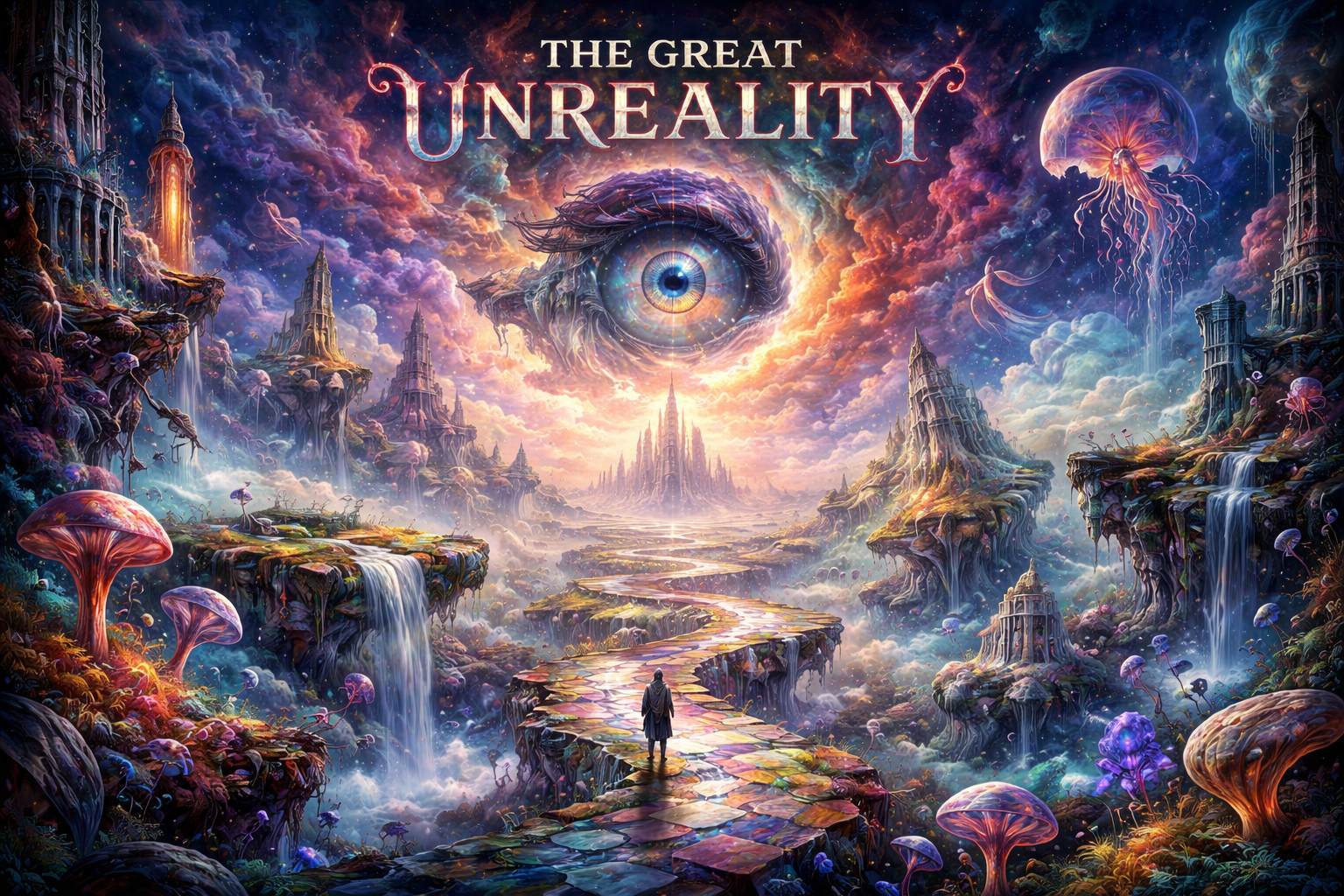
Here's something that keeps me up at night: We might be living through the moment when humanity loses its ability to tell what's real from what's fake.
AI has crossed a line.
It's no longer just a tool that helps us work faster. It's become something that can literally warp reality. This is a technology that can rewrite history, fabricate evidence, and create entire worlds that never existed.
Think about what that means.
Video evidence? Soon worthless.
Photographs? Can't trust them.
Documents? Could be completely made up.
AI can already generate images of events that never happened, create audio of people saying things they never said, and produce documents so convincing you'd swear they were real.
And here's what’s terrifying: the technology to create fake human identities already exists.
Complete social media histories. Photo albums going back decades. Entire life stories that are pure fiction but look absolutely authentic. Give it five more years, and we'll be able to produce full-length documentary films about historical events that simply never occurred.
When Reality Becomes a Weapon
The scariest part isn't some teenager making deepfakes for laughs. It's governments and powerful institutions rewriting history with tools that make their fabrications nearly impossible to detect.
Dictators have always tried to control the narrative by burning books, silencing critics, and controlling newspapers. But AI gives them something far more dangerous: the power to create an alternative reality so convincing that even skeptics might believe it.
Picture this: Legal cases where video evidence can't be trusted. Financial markets where corporate announcements could be perfectly forged. International incidents triggered by fake diplomatic statements that look completely real.
Our entire system—courts, markets, governments—runs on the assumption that we can verify what's true. That assumption is falling apart.
Nobody Will Trust Anything
Here's where it gets really ugly. As AI-generated fakes flood the internet, we're going to see trust collapse across the board. Every image becomes suspect. Every video questionable. Every document potentially fake.
The rational response in a world where convincing fakes cost nothing to produce? Trust nothing.
But the real tragedy is that legitimate information gets dragged down with the fakes. Real whistleblower video? "That's obviously AI." Authentic historical photo? "Probably generated." Actual news? "Can't trust the media anymore."
This creates the perfect environment for anyone who benefits from confusion. When nothing can be verified, everything becomes equally unreliable. Truth drowns in a sea of plausible alternatives.
And the economic implications are massive.
How do you value information when you can't verify it? How do you price risk when the data itself might be fabricated? Markets depend on reliable signals. What happens when those signals can be perfectly faked?
The Case for Owning Real Things
This is why I keep coming back to physical assets, particularly precious metals. In a world where digital reality is crumbling, things you can actually touch become incredibly valuable.
Gold and silver aren't just commodities anymore but, more importantly, anchors to reality itself.
Think about their unique properties in this new world: They're physically scarce. No AI can generate them.
You can verify their authenticity with tests that are thousands of years old.
They exist completely outside the digital realm, immune to all the reality-warping that's about to hit everything else.
When you can fake photos, forge documents, and generate convincing video of anything, a 400-ounce gold bar sitting in a vault remains stubbornly, undeniably real. You can hold it. Weigh it. Test it. No algorithm can conjure it into existence.
Look, I'm not some doomsday prepper or technophobe. This is just practical risk management. As the digital world becomes less trustworthy, physical assets will command a premium for one simple reason: they're verifiable.
The very thing that made precious metals seem old-fashioned: their physical, primitive nature, is now their greatest advantage.
We're heading into an era where the ability to distinguish real from fake becomes the scarcest resource of all. In that world, owning something undeniably real… something tangible, something that exists in physical space, something no AI can fabricate, isn't just smart investing.
It's your hedge against a world where nothing else can be trusted.
Keep coming back,

Chris Curl
Editor, Daily Profit Cycle